Trying to win one for the ‘Bammer

How obvious can you be?  This weeper was big on today’s Chi Trib front page:

When 17-year-old Brianna Rice was diagnosed with celiac disease in February, she had health insurance.

She doesn’t now.

In the months that followed her diagnosis, her insurance company, American Community Mutual Insurance, combed through her medical records and ruled that her parents lied on her application last year.

In May, American Community not only canceled her policy, but also rescinded coverage all the way back to the day it started — Nov. 1.

Etc. 

Add Georgie Ann Geyer’s column of personal trial-morphed into argument for ObamaCare, and you have a one-two effort to massage believers and seduce fence-sitters:

WASHINGTON — I am sitting here, filled with a disbelief so profound about those of my fellow citizens who don’t seem to believe that we are in the grasp of horrendous health-care and insurance problems that I could scream, were not so many others screaming!

I could buy the ensuing sentiment if it were about impending economic dissolution through national debt that throttles growth and inflates the cost of everything in sight:

[I]t would seem that many Americans still don’t believe we have a deadly serious dilemma. It’s the old “It-can’t-happen-to-me” theme, mixed up with the ridiculous idea that government can’t do anything good at all. So let me offer my own personal story.

It’s a sad story, well told.  But she urges on us a course that will lead to a much sadder one for most of us, being “deeply touched,” as she is,

by the overarching idea behind President Barack Obama’s speech last week. “It is wrong,” he said, for not all Americans to have health insurance, “and nobody should be treated that way in the United States of America.”

Or anywhere else?  Sad it is that a smart woman with decades of experience in analyzing and deciphering world problems would so judge a national crisis as to find herself

wondering whether those who are so perfervidly against government-run alternative health insurance care at all about those of us whom the private health-care system has treated with such errant and selfish shabbiness. Who knows? Maybe next time it will be one of them.

Maybe next time it will be all of us sinking into economic and civilizational mediocrity in a fond, foolish hope inspired by deeply touching oratory.

Meanwhile, how about a newspaper with editors who aren’t so obvious about where they stand?

Later, from Reader M.: I had the same impression you did when I got my Tribune Daywatch this morning.  Yes we need healthcare reform – I get it.  Let’s deal with unscrupulous insurance companies.  Better yet, let’s deal with ambulance chasing lawyers. 

But let’s not rush into something because of a tug at the heartstrings – whatever we decide to do in a moment will take years to undo, if it is poorly crafted.  My daughter lives in Canada, and has seen the real deal when it comes to government healthcare.  She is not impressed.  Neither am I. 

I am not happy with the status quo, but I don’t want a system that will ration care or limit my options if I choose to invest my own money in my health.

What’s the quota?

“Where’s the diversity?” asks Wednesday Journal head.  “[One] minority among 36 new teachers ‘unacceptable,’ says Collins.”

Of the 36 teachers hired for the current school year in District 97, one is a minority, a development that the Oak Park’s elementary district’s superintendent calls troubling and unacceptable.

She’s not kidding:

Along with hiring one black teacher, the district hired one minority administrator, an assistant principal, who also is black. In a stern statement read during the board’s meeting last week, Superintendent Constance Collins vowed the district will do better next year in finding and hiring minority teachers and administrators.

Nothing against white teachers, you know:

The superintendent and board . . . stressed that they’re not displeased with the new staff members but only want more diversity moving forward.

And fewer whites, who do nothing for diversity.

The super feels really bad about it:

“It is disappointing and troubling to discover that we have not been true to our mission, which says that we are committed to the needs of a diverse population,” said Collins, the district’s first female and first black superintendent, who was hired in 2005.

“The needs of a diverse population,” yes.  Such as?

I asked in an on-line comment, “Is there research showing same-race teachers get better results? I’d like to see it.”

Is there?

Short histories are best

My Short History of Oak Park, Vol. 1, 2004-2005, announced on the first page, is based on my Wednesday Journal columns of those years.  They drew on my life-long affiliation with this, the world’s once largest village, home of Hemingway, Rice Burroughs, and Ray Kroc.

Ditto for Short History, which is in the self-publication tradition of

Margaret Atwood, William Blake . . . Robert Bly, Lord Byron, Willa Cather, Pat Conroy, Stephen Crane, e.e. cummings, W.E.B. DuBois, Alexander Dumas, T.S. Eliot, Lawrence Ferlinghetti, Benjamin Franklin, Zane Grey, Thomas Hardy . . . Nathaniel Hawthorne, Ernest Hemingway, Robinson Jeffers . . . Stephen King, Rudyard Kipling, Louis L’Amour, D.H. Lawrence . . . John Muir, Anais Nin, Thomas Paine, Tom Peters, Edgar Allen Poe, Alexander Pope, Beatrix Potter, Ezra Pound, Marcel Proust, Irma Rombauer, Carl Sandburg, Robert Service, George Bernard Shaw, Percy Bysshe Shelley, Upton Sinclair, Gertrude Stein, William Strunk, Alfred Lord Tennyson, Henry David Thoreau, Leo Tolstoi, Mark Twain, Walt Whitman, and Virginia Woolf.

I am delighted to see Shelley among them. Blithe Spirit in this context is, of course, based on “To a Skylark,” as was Noel Coward’s play title. I make that clear enough on the third page of Short History, quoting:

Hail to thee, blithe spirit!

Bird thou never wert-

That from heaven or near it

Pourest thy full heart

In profuse strains of unpremeditated art.

— from Shelley, “To a Skylark”

Go Shelley.  Go Short History of Oak Park.

===========================

Later, from fellow Midwest Writers Assn. member Hal Higdon, in the matter of self-published authors, with a Hemingway-esque twist:

I hope you didn’t miss Rick Yager, the long-time Buck Rogers artist. His older sister was a friend of Hemingway, who once fired a revolver in the Yager house. The bullet may still be in the ceiling. Of course, I tell you this after the fact.

More about the industrious and adept Higdon, who ran seven marathons in his 70th year (he told me, and I believe it), here.  Indeed, soon to be published is his novel Marathon.

Tags: ,

Wheeling Jesuit: The Glynn Account

Rev. Edward Glynn SJ, the Rev. Julio Giulietti’s only Jesuit friend in maybe the whole wide world (at least his sole supporter among four Wheeling Jesuit U. trustees) has provided a paper trail that helps to unravel the mysterious story of how and why Giulietti was ousted as WJU president.

An email trail, that is — our age’s inexorable friend of tell-all revelation and foe of apocalyptic meandering — posted at the “Save! Wheeling Jesuit University” blog. Glynn, also a WJU director, wrote on Aug. 1 to the 19 directors, excusing himself from a “special meeting” set for Aug. 5.  His brother was dying, and he would be attending wake, mass, and burial back in Clark’s Summit PA.

He had been “looking eagerly forward to participate”; so he filled the directors in on his thinking.  This included his July 13 email to board chair Bill Fisher (who doubles as financial officer for the Wheeling diocese, a position directly responsible to the bishop) asking

“what else is on the agenda for the special August meeting.  If it is only the assessment of the president, how can we do an accurate assessment and one helpful to the institution if we don’t have input from the faculty, administration, staff, students and alumni/ae?”

The fat was in the fire for Giulietti, and Glynn was prodding.

Fisher got back the same day: Nothing else was scheduled.  His language was typical email shorthand and mysterious:

“ This is the only agenda item. I copy Mr. [Tom] Scheye [not the lawyer, as earlier stated, but facilitator (consultant) as elsewhere designated] as he is contracted to [sic] all of what you mentioned , the time table I am not sure.”

Pronto, Glynn to Scheye, seeking wisdom in the matter:

“Bill without answering my question sent you a copy of my question to him. Do you have an answer to my question?”

Fisher explained further:

“I was hoping Tom Scheye would answer your question. We are going to discuss what is complete at that time.”

So.  Scheye is working on it, namely how the directors can assess Giulietti without anything to go on from the university community.

Scheye got back the next day in workmanlike fashion:

My assessment will not be complete until I have had the chance to interview members of the faculty, staff and student body, and those interviews will wait for the beginning of the new semester. However, I wil l send the Directors an edited version of their own comments in time for the August meeting, and I have suggested to Julio that he complete his self-assessment so that might be available to provide context for the Directors’ comments. In short, the Directors will not have my assessment in August, but they will be able to see what their fellow Directors’ comments are. Hope that helps.

As emails go, this is brilliant.  And in fact, revealing.  He would be advising the directors about what they were on record as saying and was waiting to hear from “Julio.”  His own assessment (does he mean his summary? he is to assess the president?) would not be ready for the coming meeting, however.

Glynn, unsatisfied, got back to Fisher:

I still have my question. Why are we having a special board meeting that has only one agenda item and this agenda item will only be half prepared? It seems weird to me.

Two days later, having heard nothing, he asked again.  Re-sent the email.  I have done that.  You jog memory or conscience of intended recipient.  Bill responded.  My way or the highway, he said:

Serious decisions need to be made about the direction of the University. You will receive a packet of information that might clarify things.

I exercise my right as Board Chair t o call the meeting a majority of the board has told me they want one.

If you feel strongly it is a waste of time, you may ask to be excused.

Stay with your dead brother and stop bothering me.

The response tore it for Glynn.  Commenting to the board on Aug. 1:

I judge Bill’s sending out a second set of directors’ comments indicating in red and blue unfavorable and favorable comments respectively to be highly manipulative and insulting. Each director can read and can make his or her own interpretation. We do not need the chair to do each director’s interpretation. Otherwise WJU might as well have a board of one director.

Furthermore, as to [not Scheye’s assessment, etc., but the unnamed lawyer’s role]:

Since this was supposed to be the evaluation of the directors I find the lengthy comments of the university’s lawyer to be very inappropriate. Legal counsel is not a member of board of directors.

Glynn had already voiced his opinion of [not Scheye, but the lawyer].

If I were the WJU president, I could never in the future trust the board’s legal counsel personally nor professionally. His phone call to the administrative assistant to the president to ask her whether in his phone call with the president that had just concluded there had been anyone else in the president’s office was politically crude and personally dumb.

This was not Glynn’s first turn around the block, he explains:

During the last four decades at a dozen and a half institutions of higher education located all over the United States [among them John Carroll U., Cleveland OH, where he was president from the midddle or late ‘90s to 2005] I have been working as a faculty member and administrator or serving on their boards. All these institutions are larger and more complicated than Wheeling Jesuit University. During these nearly forty years I have not experienced such a similarly inappropriate presidential evaluation and calling of a special board meeting to consider the half completed presidential evaluation.

As for the coming meeting:

This special board meeting that is being called to consider the not yet completed evaluation of the president (Only the directors’ evaluations have been received and none from other major constituents of the university, such as students, faculty members, administration, staff and alumni/ae.) is a continuation and an institutionalization of the dysfunctionality of the WJU board of directors and is a grave disservice to Wheeling Jesuit University by the board of directors.

Meanwhile, the chairman of the trustees, Rev. Gerard Stockhausen, S.J., Ph.D., President, University of Detroit Mercy, on July 25 informed his fellow (Jesuit) trustees that he was

calling a special meeting of the WJU Board of Trustees by conference call at 1:45 PM EDT on August 5. The only agenda item will be to discuss any action(s) taken by the Board of Directors at its August 5 meeting, and to take whatever action the Board of Trustees needs to as a result of action(s) taken by the Board of Directors.

As a result?  Such as unfavorable evaluation?  They were to endorse or not endorse it?  As it happened, the directors on Aug. 5 failed to register a 2/3 majority in favor of ousting Giulietti, which dictated the action to be taken.  It was to oust Giulietti themselves, by a 3–0 vote, Glynn and Giulietti being absent.  This they did.

Bad day for fun-lovers

The singers — Beyonce (don’t know her last name) and Taylor Swift — both wore bright red for their acceptance speeches at the MTV awards last night:

Beyonce in red

 
But Taylor Swift (white girl on right) wore more of it.
 
We wouldn’t know about red dresses if rapper Kanye West hadn’t make a fool of himself, jumping on stage to interrupt the Swift lass:
 
K West at awards
 
He’d been “swigging Hennessy cognac on the red carpet earlier in the night” and so had a (lame) excuse, which is more than can be said for yet another entertainer, tennis-player Serena Williams, who socked it to an official for a call Serena did not like:
 
Serena to judge
 
‘If I could, I would take this ******* ball and shove it down your ******* throat,’
reportedly.  She’s been fined and may be suspended.
 
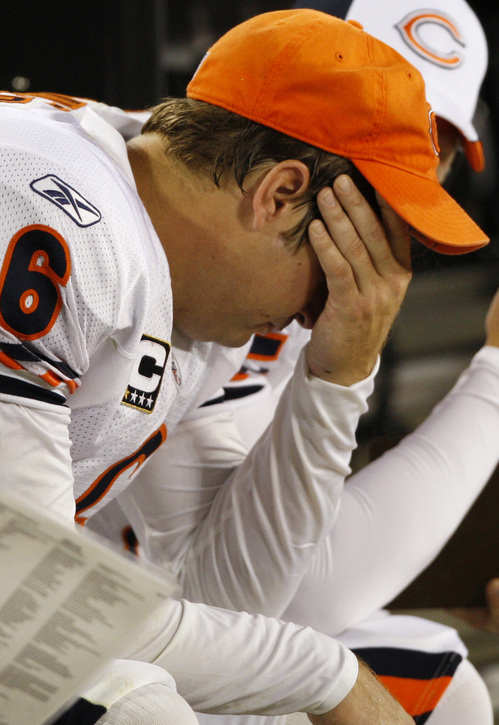
Finally, a bad day for a white guy, the Bears’ Jay Cutler, who threw four passes to the wrong receivers.
 
Here he is, hiding his sadness:
 
Jay Cutler sad
 
So it goes, because that’s entertainment!

Back in the courts with Shanley

Fr. Shanley of Boston is challenging repressed memories in the Mass. Supreme Court.

Shanley is challenging his conviction based on an ongoing debate in the psychiatric community over the validity and reliability of repressed memories. The highest court in Massachusetts will hear Shanley’s appeal Thursday.

This is a very big deal, gets to the heart of many a case against the allegedly abuser priest.

Nearly 100 scientists, psychiatrists and researchers have signed a friend-of-the court brief denouncing the theory of repressed-recovered memories. Another group has submitted a brief supporting the theory.

His lawyer says he was convicted on

“junk science” testimony about repressed memories by prosecution witnesses.

It worked this way, he said:

“They needed repressed memories to normalize for the jury what was otherwise an extraordinary assertion — that he could be completely oblivious that this ever happened and then remember it 20 years later.”

Huge money settlements have been made to Shanley’s victims.  His case led to the departure of Cardinal Bernard Law from Boston.

The Wheeling Jesuit mystery

Do you like a mystery?  Do you love a mystery?  If so, you have to love the slowly unfolding Wheeling Jesuit story. 

The heart of the matter is why Rev. Julio Giulietti SJ was abruptly fired as president of Wheeling Jesuit University.  Inside Higher Education has more than anyone else on the matter:

Did the bishop do it?

The perceived rush to judgment has led to speculation that the local Roman Catholic bishop, the Most Rev. Michael J. Bransfield, a longtime donor with no jurisdiction over the university, pushed for the ouster. A spokesman for the diocese denied the bishop’s involvement, but DiTrapano and another board member have heard otherwise.

“I believe that this termination was directly ordered by the diocese,” said Lynda Wolford, a director who resigned over the issue.

Wolford said she was told by someone “close to the diocese” that the bishop ordered the termination, but she would not elaborate on the source.

Did he have motive?

Despite denials from the diocese, many believe the bishop was interested in obtaining a valuable piece of property that Father Giuletti appeared best positioned to acquire. The property in question was Mount de Chantel [sic: it’s Chantal] Visitation Academy, a recently closed school that is still home to five nuns. The nuns had an affection for Father Giulietti and the university, which is located on contiguous property, and had hoped Wheeling Jesuit would purchase and renovate the buildings – providing a home for the sisters for the remainder of their lives.

While the university may not have been financially positioned to acquire the property, Father Giulietti’s favored access was a source of frustration, according to Wolford’s unnamed source.

Did he have means?

[William] Fisher, the Board of Directors chair who initiated the vote, works for the bishop as the diocese’s financial officer.

Did the Jesuits do it?  Well, three of them who are trustees were the proximate cause, no doubt of that.  The two other trustees, also Jesuits, were missing when they voted to get rid of one of them, Giulietti, in the absence of his sole supporter among them, Rev. Edward Glynn SJ, who was away at a family funeral.

These are the three:

Rev. Brian O’Donnell, the Jesuit community rector for Wheeling; the Rev. Gerard Stockhausen, president of the University of Detroit Mercy; and the Rev. Thomas F. Gleeson, a former president of the Jesuit School of Theology in Berkeley, Calif.

Gleeson unfortunately has a blot on his escutcheon, having been named

as a defendant in a highly publicized sexual harassment suit filed by a former male student in Berkeley. The suit, which alleged Gleeson had asked to masturbate with the young seminary student, settled out of court in 2000 with no admission of wrongdoing . . .

The three acted after the much bigger board of directors came just short of the 2/3 majority needed to fire Giulietti.  The trustees had apparently been quiescent, to go by Rudolph DiTrapano, a Charleston, WV, lawyer and member of the board.

“[Giulietti] survived the Board of Directors, then to add insult to injury some Board of Trustees I’d never heard of, three out of five show up, and overrule us,” DiTrapano said.

“I have not heard of any activity that the Board of Trustees embarked on [before this vote],” he adds. “It’s just bizarre that we were required to vote if our vote was meaningless.”

That is, Guilietti’s fate was sealed, in his view.  It’s still a mystery, but the Inside Higher Ed reporter, Jack Stripling, has done much to make it less mysterious.