Wheeling WV Bishop accused, his cathedral rector balking at giving testimony


Sexual Abuse: A Journal of Research and Treatment
Sexual Abuse: A Journal of Research and Treatment (Photo credit: Wikipedia)

The Wheeling Intelligencer presents the Bishop Bransfield story, earlier part of a Phila. Inquirer story, in the starkest of terms:

PHILADELPHIA- A man testified Wednesday in a clergy abuse trial that a priest raped him in the 1970s at a beach house owned by the Most Rev. Michael J. Bransfield and that he was told that Bransfield, who currently serves as bishop of the Diocese of Wheeling-Charleston, also sexually abused a boy.

The 48-year-old man also testified that he saw Bransfield with a car full of boys at a farm owned by his accused abuser, the Rev. Stanley Gana. The witness said that Gana told him Bransfield was having sex with the boy who was in the front seat.

Another man has testified that Bransfield had a lewd conversation with him.

The testimony came at the trial of the Rev. James Brennan, who’s accused in a 1996 child-sex assault.

Bransfield has not been charged, nor has he ever been charged, the Intelligencer reports. Nor accused, as far as a monitoring of his history on the Internet can tell us.

The Wheeling diocese is withholding comment until “the facts and issues surrounding this testimony are made fully known to the Diocese,” except to urge Catholics “to remember all victims of sexual abuse and to pray for them and their families” and to dismiss the trial itself as a “circus” and part of a smear campaign by prosecutors.

“They seem to want to bludgeon witnesses, smear individuals not on trial, anything to bolster their persecution of the church,” the diocese said in a separate statement. “The trial appears to be evolving into a circus with no rules and boundaries.”

Apparently at issue is the appearance at the trial as a material witness of a Wheeling priest, Monsignor Kevin Quirk, rector of the cathedral. A local judge is expected to rule tomorrow (4/20) whether Monsignor Quirk is required to testify.

Who owns St. Sabina parish anyway?

Fr. Pfleger’s executive assistant objects to the arrival at the St. Sabina rectory of the new priest.

“Can you just imagine somebody moving into your house that really was not invited by us,” said Kimberly Lymore, the Associate Minister at the Faith Community of St. Sabina.

She’s been misled. It’s not her house, nor the parish council’s. That matter was decided a long time ago, when “trusteeism” was squelched in the American church by Rome.

Trusteeism controversy

ca. 18151840

In its infancy, the Catholic Church in America relied on the initiative and benevolence of laypeople to an extraordinary degree. Lacking priests, many early parishes were established and managed by laity. As the nation grew and the clerical personnel of the Church increased, priests and bishops sought to standardize the Church’s organization in accord with canon law and common practice. The result in some localities was tensionand sometimes hostilitybetween pastors and bishops on one side and lay trustees on the other. Significant battles over control of parishes occurred at St. Mary’s in Philadelphia and in New York, among other places.

Indeed, there is little new under the sun when it comes to the Roman church, periodic clerical chutzpah notwithstanding.

To S-T on McClory on Fr. Pfleger & Cardinal George

Letter to S-T:

Dear Editor:

Bob McClory’s argument for keeping Fr. Pfleger at St. Sabina parish limps in several respects.

First, it’s Bob’s own credentials for limiting Cardinal George’s authority in this case, Bob being an enthusiastic proponent of new limitations on bishops’ authority in general.  Indeed, the Pfleger case fits his predilection for espousing radical change in the church.

Second, he (rightly) praises Pfleger’s pastoral availability to the bereaved and suffering — a combination of high profile achieved by Pfleger himself and Pfleger’s abundant empathy.  But nothing in his transfer from St. Sabina would interfere with that, even work as president of a high school.  He could be equally available to bereaved and badly treated people.

Third, he says the cardinal has handled this badly, to which I ask, Pfleger hasn’t?

— Jim Bowman

Can Sex and Spirituality Coexist at College? | BU Today

Cover of "Sex and the Soul: Juggling Sexu...
Cover via Amazon

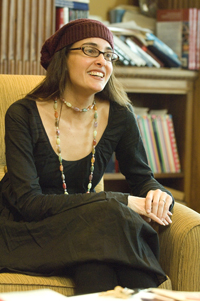
Trust me, this girl has something to say. Last night at Dominican U’s Siena Center (a most rewarding venue), for instance:

* Hooking up is hard to do. That is, most girls and boys find it stressful and unrewarding, as even boys admitted to her as a sort of mother confessor on her way to surveying sex on campus. They do it because it’s de rigueur. It’s also efficient, as it gets sex out of the way in the middle of a student’s busy day.

* Her “most painful” interviews, of the hundreds she did face to face after getting thousands of takers for online q&a about students’ personal experiences, were with the boys (men) who spoke of the social pressure they feel to have lots to brag about.

* She acquires info not as bloodless sociologist but as an apparently exceedingly well put-together young woman — Catholic out of Georgetown and (Ph.D.) Catholic U — who refs easily to her mother in her grave and father who had or have usual queasiness about candor in the sex area who has in mind some sort of solution to students’ problems.

* As neither priest nor male nor bloodless sociologist — at the podium she is a boffo performer — she can learn things and say things that no priest could say, except maybe while bending the rules as a pastoral performer. Such as: Catholic Church has three things to say about sex that students know about: don’t do it, no condoms, no being gay. Wherefore she says, to get a “conversation” going, leave that out of it and get to the extreme discomfort most are feeling, who know self-destructive behavior when they experience it and feel awful about it.

Her book is Sex and the Soul: Juggling Sexuality, Spirituality, Romance, and Religion on America’s College Campuses (Oxford).

And do not hold it against her that she is good-looking. Handsome is as handsome does here: she does handsomely.

Donna Freitas

Gleeson SJ in Philadelphia: inquiring student minds at work

Are we Catholics past the point of settling with accusers to avoid bad publicity and/or losing in court in sexual abuse and/or harassment matters? Rev. Thomas Gleeson SJ, outed three weeks ago in Philadelphia, could have had his day in court 11 years ago, but Jesuits fought the very idea and settled with the accuser, a former Jesuit scholastic. Case closed, end of story, they thought or hoped. Hardly.

As a campus chaplain at St. Joseph’s U., he had been placed in a position too public to be ignored by The Survivors Network of those Abused by Priests (SNAP), and there he was again, in the very limelight he’d wanted to avoid by the settlement. And people in charge of his new place of employment tried once again to slide under publicity radar, and once again failed. (His crucial role in ousting a fellow Jesuit from the Wheeling Jesuit U. presidency — under suspicious circumstances partly of Gleeson’s own making — was a bad move by someone seeking anonymity.)

This time, Phila. Daily News coverage drove the St. Joe’s president, Rev. Timothy Lannon, S.J., to issue a university-wide memo “as students were finishing midterms and packing up for spring break,” as the student newspaper, The Hawk, noted this week. The memo was terse, even perfunctory: Gleeson had been accused but had been vetted by the Jesuits — “cleared for assignment,” a spokeswoman told the News.

Missing from the memo was “information concerning Gleeson’s history and subsequent settlement,” The Hawk’s editors wrote. Indeed, “the poorly worded statement created more questions and concerns than conclusions, and the university has yet to reveal how it plans to move forward with Gleeson’s case in the future,” they wrote in a carefully constructed editorial.

They added:

Given the enormous accusations currently levied against the Archdiocese of Philadelphia, it is surprising that Saint Joseph’s University officials did not think more carefully before responding in a seemingly distant and ineffective way.
The university could have opened the door for conversation about the circumstances and reasoning behind Gleeson’s hire, providing a great opportunity for community discussion on issues that are dominating Philadelphia’s headlines. Instead, St. Joe’s offered the same one-way declaration that has plagued the Catholic Church for decades.

Instead, the university offered “lackluster explanations” that did not inspire confidence. “When the university doesn’t defend their employees it makes it hard for students to get behind them with support,” the editorial noted.

That’s a fair description of how the Gleeson business has been handled, not only in Philadelphia but before that in West Virginia and before that in California. (It’s also how much or most priest abuse and/or harassment has been treated, for that matter.)

At what point, we must ask, does Jesuit loyalty to their own (as bishops’ to their priests) give way to the sort of “open communication” that has been respectfully requested by St. Joseph’s U. student editors?

Anglicans bring Anglican style to Rome

In England and Wales (as elsewhere), Anglicans are coming to Rome:

The ordinariate allows Anglicans to enter the Catholic Church while retaining “a love and gratitude for the Anglican forms of faith and worship.”

The ordinariate website explains that an interim governing council is meeting regularly to oversee the development of the organization. An official governing council will be formed after Easter 2011.

The governing council will have at least six priests, presided over by the ordinary. Half of the membership is elected by the priests of the ordinariate. It will have a pastoral council for consultation with the laity and a finance council.

The council will have the same rights and responsibilities in canon law that the college of consultors and the council of priests have in the governance of a diocese. Out of respect for the synodal tradition of Anglicanism, the ordinary will need the consent of the governing council to admit a candidate to Holy Orders and to erect or suppress a personal parish or a house of formation.

The council will also have a vote in choosing a list of names of a new ordinary to submit to the Holy See.  [Italics added]

These last two items demonstrate a distinctly reformist trend in Roman Catholicism.  Stay tuned.

More: This England and Wales ordinariate “would probably be a model for what we would do here in the U.S.,” said Cardinal Donald Wuerl of Wash DC a few weeks.  He has been named point man for ordinariate-organizing in the U.S.